


 By
By 
Agro-pastorals have long been the backbone of rural livelihoods in Somaliland, serving as a traditional land management and production system that mirrors wildlife dynamics. Its flexible and adaptive structures have enabled communities to survive in semi-arid and arid environments characterized by erratic rainfall, patchy vegetation, and recurrent droughts
Frequent recurrence of aperiodic droughts and occasional flash floods may be attributed to the climate change. Recurrent drought is reducing livestock numbers, causing the depletion of water sources; decreasing agricultural yields, and causing an overall decline in both livestock and agricultural production. Drought conditions have always been a recurring feature in the long history of agro-pastoral production in the region. But while it has been a common understanding in the rural areas that droughts used to occur once in every ten years, it is important to note that the occurrences of such cyclic droughts during the past 30 years or so were becoming more frequent and more hard-hitting than ever before.
Most of the agro-pastoralists practice rain fed farming with batches of irrigated agriculture mostly in Somaliland. Droughts and delays in the onset of rains have made the farm lands become drier and difficult to plough, caused stunted growth of crops and slow germination of seeds resulting in early wilting of the crops. In all the areas where rain-fed agriculture is well established, harvests have diminished; in some cases, because of water shortages induced by higher temperatures that cause high evapo-transpiration, in others because of disturbed crop cycles.
The trend of crop production in the rain fed agriculture indicates a general decrease in yield due to mostly rainfall patterns. This indicates that crop yield, for example sorghum and maize, has been decreasing per hectare of land every year since 2007. Furthermore, it has become difficult to grow maize due to insufficient moisture. The major reasons for the reduction of cereal crop yields are: a) low amount and short rainy period; b) shift in time of rainy season causing discrepancy in the cropping calendar; 3) soil fertility loss due to erosion by water and inappropriate agricultural practices; 4) invasive weeds (Parthenium hysterophorus) and pests such as worms (‘Dirxi”) affecting both maize and sorghum. Following the unpredictable nature of the rainfall, the cultivation of cereal crops in most parts of the rain fed agriculture has become highly opportunistic.
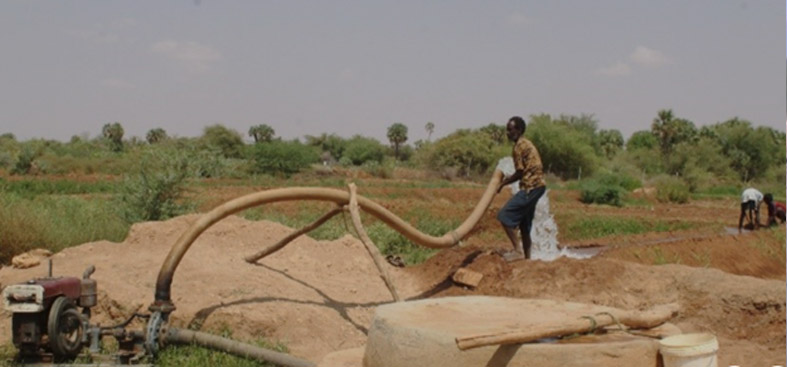
Small scale irrigated horticultural crop production is one of the main source of income for the agropastoral communities in Somaliland and most of the farms are located along the seasonal water courses. Diseases of horticultural crops are becoming ubiquitous in the small scale irrigated farms of Somaliland. Though it needs further study, agro-pastoralists relate this new phenomenon observed on the crops to the climate change. Un Familiarized diseases are being observed during the periods of higher temperatures. Which increased of infestation of pests and diseases of both cereal and horticultural crops in the Agricultural areas of Somaliland. A pest infestation of stem borer ‘Dhuunqabad’ is repeatedly occurring every year now. This pest with its disastrous effect mainly affects cereal crops (maize and sorghum) and is usually active during the early growth stages. In the case of small scale irrigated agriculture, where vegetable and fruit crops are mainly produced, agro-pastoralists faced as a threat to their production systems: Aphids (Quddeeye), curl leaf (Qallajiye) and root drying (Dabo madoobeeye). These diseases do not affect either all vegetables or fruits. For instance, Dabo-madoobeeye mainly affects tomatoes; Quddeeye impacts both tomatoes and salads, while Qallajiye is a disease which mainly affects citrus fruits (Table 3). Moreover, according to the community respondents, these horticultural crop diseases occur from time to time with higher infestation and damage when there is a remarkable rise of temperature. Thus, it seems that these ‘diseases’ favor hot weather condition.
In addition to this, the impact of the recurring droughts has also been triggering movements of stockowners and their animals to longer distances in search of better grazing areas. Agro-pastoral households were moving with their camels towards the coastal areas in search of water and pasture. At only few water points in rangeland areas across the countries. Drought is not only causing damage to the pastoral livelihoods but also it reduces the resilience of the communities to shocks and makes them highly vulnerable to food insecurity. Moreover, the number of livestock and the quantity of crop yield are decreasing, keeping the agro-pastoral communities become more food insecure. Recurrent drought intervals supports the aperiodic nature of nowadays drought occurrence in contrast to the 19th century’s quasi predictable periodic droughts.
Mohamoud Abdi Jama
Veteran Exile Freelancer Journalist